Blog
Four ways to strengthen your nonprofit governance
Times have changed. Yet in many nonprofit organizations governance structures and processes haven’t kept pace, evolving with the realities of fewer volunteers, more difficult decisions, and greater expectations.
The good news is there are four ways that can help make your governance stronger and more effective in complex times. Additional tools and resources are available in the Reimagining Governance Lab, a virtual hub for nonprofits to discover new and better ways to do their governance, including on how to build strength.
One: Get the fundamentals of nonprofit governance right.
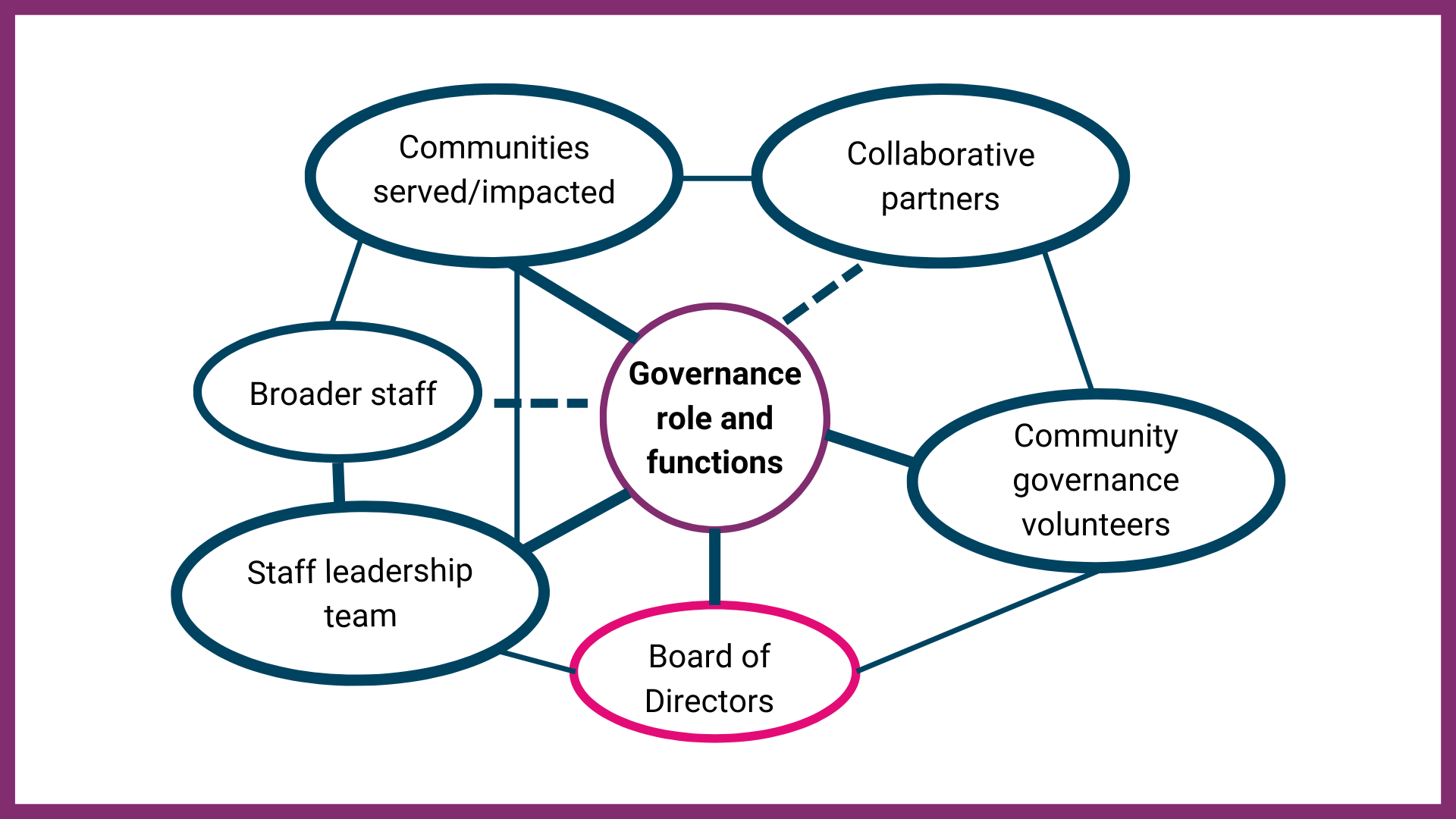
Having a generative conversation about the role governance plays in your organization, what influences it, and key governance responsibilities helps save time and strengthens decision-making down the road.
How? When tough decisions or complex issues arise board members and staff leaders will have a clear and shared understanding about things like who does what, how the board and staff work in partnership, and what accountabilities are expected by those impacted by the mission. Leaders will also appreciate that governance is a dynamic ecosystem, not a static model, allowing governance processes and practices to be tailored to the organization’s distinct and changing needs.

- Resource: A Nonprofit Organization’s Governance Ecosystem
- Research Report: Impacts on Governance Design for Nonprofit Organizations
- Resource: Governance Functions and Responsibilities in a Nonprofit Organization
- Tool: Build the Foundations of Good Governance
- Tool: What Fixed or Fluid? Map the circumstances shaping your organization’s governance
- Tool: Differentiating governance responsibilities and decisions
Two: Make better decisions by unpacking them.
The board and staff leadership must sometimes make tough, strategic decisions. These kinds of decisions can be big, monolithic tasks like “decide the strategy”. “Unbundling” these big decisions using the Governance Decision-making Framework gives more clarity about what needs to be decided, which then informs who participates and how it’s done.
This purpose-driven approach to decision-making avoids common issues such as a few people, like an Executive Committee, making all the key decisions, getting bogged down at the decision-point, missing the winning conditions for effective engagement, or focusing on tactical and routine decisions at the expense of strategic ones.
Three: Create more agile governance by drawing in a broader network.
Board members are hard to recruit, and the work can be overwhelming and unrealistic. But the board doesn’t have to do it all! Think about the board as ‘home’ of governance when fulfilling legal and regulatory requirements, but the ‘host’ for other functions.
This broadens opportunities for participation beyond the board which can:
- ✓ reduce workload
- ✓ leverage the talents, experience and knowledge of the organization’s full ecosystem
- ✓ avoid token representation on the board
- ✓ and ensure the voices of those impacted by the mission are heard.
What does agile, engaging governance look like? It’s driven by principles, not individual personalities, old habits, and norms. It’s crystal clear what must be centralized and controlled by the board and what can be more broadly shared. Processes and structures are more fluid, so there’re fewer formal committees and more task groups that are drawn upon as needed.
Four: Foster a more intentional nonprofit governance culture
Governance culture, often unacknowledged, has a profound effect on how the board navigates the complex environment, impacting relationship dynamics, strategic choices, decision-making practices and who’s recruited. It’s shaped by the board and staff leadership’s values and life experiences, as well as assumptions, norms and habits.
The goal is to make your governance culture more explicit. For example, there’s productive conversations about the values and principles that should drive governance, such as equity, and how governance values align with organizational ones. Leaders also hold themselves accountable, demonstrating how values and principles show up in governance relationships, processes and practices.
Taking action on these four strategies enables your governance to respond effectively to the shifting and complex environment. Explore the tools available in the Reimagining Governance Lab, and decide which will benefit your organization most.
This blog was written by Linda Mollenhauer to highlight learnings from ONN’s Reimagining Governance project, a collaborative initiative with Ignite NPS.