Top HR challenges specific to nonprofits & tips to solve them
This blog was contributed by Folks HR as part of an ongoing partnership with ONN.
Running a nonprofit organization comes with many unique human resources challenges that make HR management particularly complex. Unlike the private sector, nonprofits often operate with smaller budgets, compliance issues, and a heavy reliance on volunteers.
Here are some of the top HR challenges NPOs face, along with strategies to overcome them.
1. Having limited resources and budget
It is no secret that nonprofits typically function with tight budgets and limited funding flexibility. Moreover, the current economic context is the biggest challenge for a whopping 89% of Canadian nonprofits. In this context, crucial HR initiatives such as offering competitive compensation and training programs or investing in modern HR software solutions get deprioritized. This, in turn, reinforces and multiplies the HR challenges faced by non-profit organizations.
Here are some tips to remain effective and people-focused in this context:
- Leveraging local partnerships with businesses and community organizations. These can help you access training, mentorship and technology at lower costs.
- Implementing low-cost solutions to streamline your talent management. Some HR tools (applicant tracking systems, HRMS or collaboration platforms, for instance) offer discounts or specific pricing to nonprofits.
- Prioritizing HR initiatives strategically and focusing on impact. Rather than trying to do everything all at once, NPOs should focus on urgent HR needs, such as hiring, onboarding and retention.
2. Ensuring compliance in employee and volunteer management
HR compliance is a particularly complex challenge for nonprofits, as they have to balance employee and volunteer management, employment best practices and health and safety regulations. Considering that NPOs represent around 14.5% of all jobs in Canada, it is easy to understand that the stakes are high in terms of compliance.
So how can NPOs juggle between employee and volunteer management while remaining compliant?
- Documenting HR policies clearly is crucial. Creating handbooks or hubs that outline employee and volunteer policies may take time, but it will prevent headaches and potentially serious issues in the long run.
- Adopting digital HR systems to ensure consistency in talent management. HR software solutions centralize crucial information, reduce administrative errors and let you track training completion and certifications.
- Offering compliance training to stay up to date on legal obligations and workplace safety rules. Remember to leverage partnerships and digital tools to reduce costs here.
3. Hiring and retaining talent
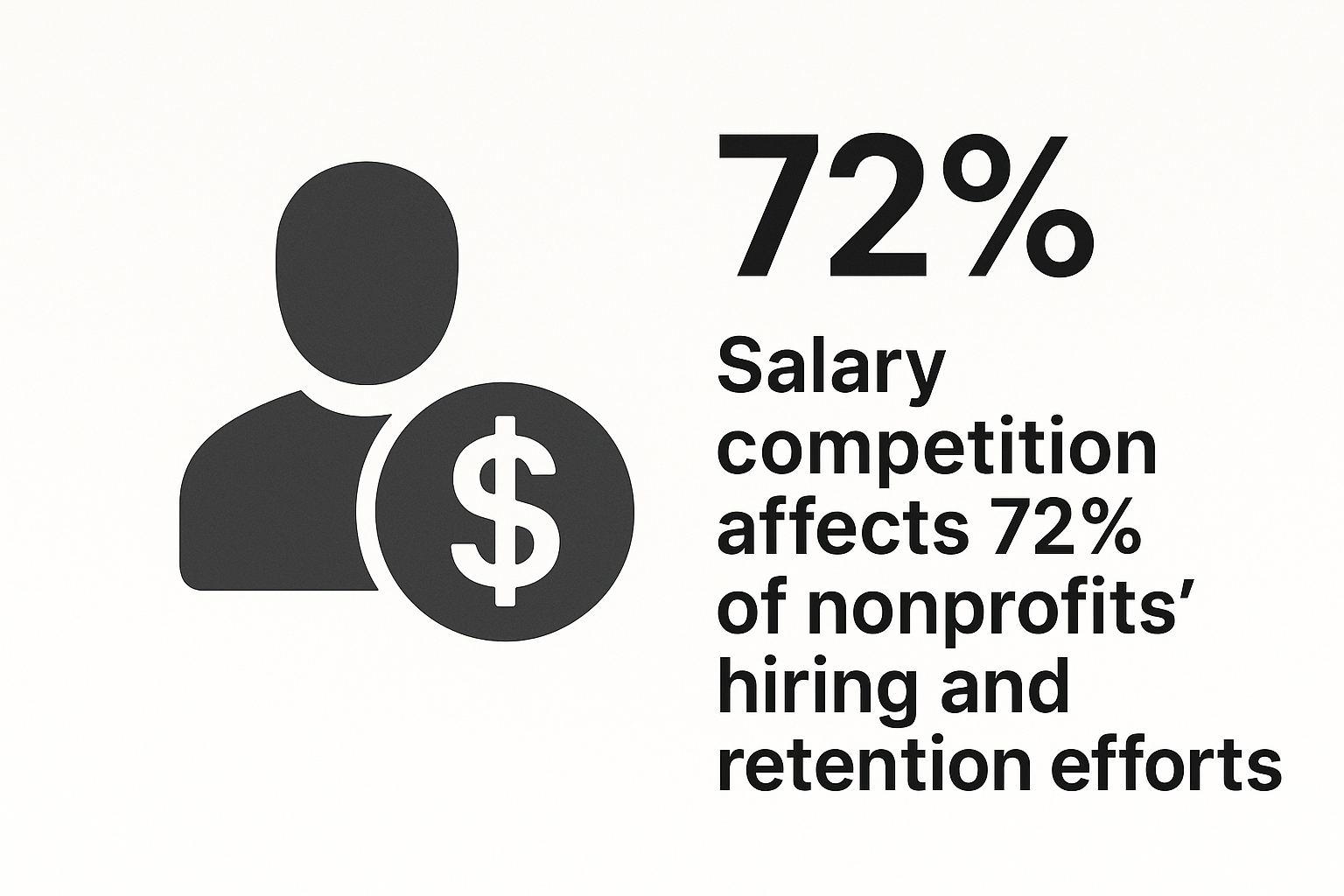
Nonprofits often struggle to compete on pay, which can hinder hiring. Salary competition affects 72% of nonprofits’ hiring and retention efforts. Even when roles are filled, training and retention can be difficult given resource constraints.
Here are tips to overcome this major challenge:
- Providing non-monetary benefits to remain competitive. If you can’t compete on salary, your organization has to offer flexible schedules, bonus vacation days, professional development opportunities, and a truly supportive and inclusive workplace culture.
- Highlighting the impact of mission-driven work. Did you know that 70% of Generation Z job seekers want to work for organizations that share their intrinsic values? This means you can stand out by emphasizing the purpose and impact of each role over salary.
- Focusing on strong onboarding programs to reduce early turnover. Poor onboarding experience is often the root cause of voluntary turnover. Volunteers and employees alike should benefit from structured, personalized and inclusive programs.
“In nonprofits, human resources are the very heart that keeps the mission alive—carrying meaning, values, and change—while creating a space where passion and commitment matter far more than market value.” – Isabelle Lavoie, Project Manager in Talent Development and Senior Talent Acquisition Strategist.
4. Dealing with high turnover rates
Turnover is costly, both financially and operationally, and it is a common challenge for most nonprofit organizations. Tellingly, the number of Canadian NPOs with high turnover rates jumped from 27% to 39% between 2023 and 2024.
To counteract this overwhelming issue, nonprofits should be:
- Investing time and effort in recognition and making sure their people feel valued. Purpose-driven work calls for even more appreciation of contributions.
- Fostering the sense of belonging by encouraging inclusive practices and connection between colleagues.
- Listening actively to employee and volunteer feedback. Surveys and regular check-ins are key to address issues before they turn into disengagement and voluntary departures.
5. Implementing HR technology
When dealing with time and budget constraints on a daily basis, implementing new tools often falls at the bottom of our list of priorities. And yet, HR technology is first and foremost made to help you save time and money in the long run.
How should your HR tech implementation strategy work, then?
- Prioritize the tools you want to invest in; if you have no technology deck in place, it makes more sense to search for an HR software solution that will centralize information and streamline processes than look for an employee recognition platform.
- Look for local and affordable solutions. As we mentioned before, some providers offer NPO pricing and discounts. Buying local is also a way to ensure your data is safely stored and support services are reachable when you need them.
- Focus on user-friendliness. Employees and volunteers need to enjoy using the platform and widely adopt it so that you reap the benefits of your tech investment more quickly.
Folks HR is an all-in-one HR software solution made with Canadian nonprofits’ reality in mind, offering them reduced pricing and strategic talent management features that pay off. Request your free demo and discover how it can help you overcome your HR challenges!